Orions Fashion
Hiking should end with a view, not a throbbing toenail beneath a bruised sock. Yet many walkers discover pain after a steep descent, when toes repeatedly strike the front of their footwear. The Outdoor Industry Association’s 2024 Outdoor Participation Trends Report recorded 175.8 million Americans participating in outdoor recreation during 2023. More participation means more attention is needed on small equipment problems, including nail trauma.
So, why do hiking shoes cause toenail pain? The common causes include downhill toe impact, cramped toe boxes, loose heel hold, thick socks, and poorly trimmed nails. Repeated pressure can produce a subungual hematoma, often appearing as a dark red or black area beneath the nail. The American Academy of Dermatology Association identifies repeated injury and tight footwear as recognized causes of this condition. That evidence matters, but it does not replace a clinical examination.
Fit is personal. Shoe size alone is not enough.
This guide examines practical ways to stop toenail pain from hiking shoes in 2026. It connects podiatry guidance with real trail habits, including heel-lock lacing, measured toe clearance, moisture control, and downhill pacing. The American Podiatric Medical Association recommends choosing footwear that fits comfortably and leaves adequate room for the toes. Still, one recommendation can fail on a rocky descent. Feet swell, socks compress, and a shoe that feels perfect indoors may feel restrictive after four hours. If pain becomes severe, drainage develops, or the nail lifts, professional medical advice is the safer next step.
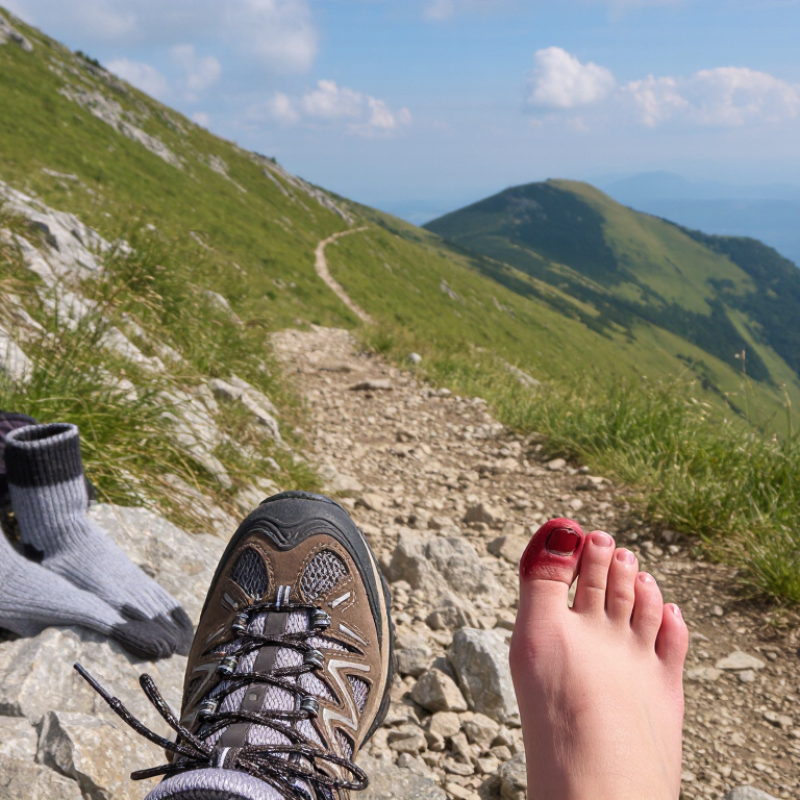
How to Stop Toenail Pain From Hiking Shoes in 2026
Identify the Causes of Toenail Pain During Hiking
Toenail pain often begins with repeated pressure, not a single dramatic injury. During downhill sections, your foot may slide forward inside the shoe. Each step then presses the nail against the toe box. A narrow front can create constant rubbing, while a loose shoe may cause painful movement. Both problems matter.
Check your toenails before a long hike. Nails that extend beyond the toe can hit the shoe repeatedly. Thickened, damaged, or curved nails may hurt sooner. Foot swelling can also reduce available space after several hours. Warm socks and humid conditions sometimes increase friction. Small details become painful later.
A simple fit test helps identify the cause. With the shoe unlaced, press your heel back and leave about a thumb’s width ahead of the longest toe. Your toes should move without touching the upper. Walk downhill indoors if possible. Notice whether your heel lifts or your toes bunch together. I once blamed the shoe immediately, but lacing and foot position were part of the problem.
Dark discoloration under the nail may indicate bleeding beneath it. Severe throbbing, increasing redness, drainage, or warmth needs medical assessment. Pain that continues after rest should not be ignored. A fungal infection, prior injury, or ingrown nail can mimic pressure from hiking footwear. Personal experimentation has limits.
The chart compares the number of characteristic clues associated with common causes of toenail pain while hiking. A high clue count does not confirm a diagnosis: pain with dark discoloration can indicate a subungual hematoma, while side-fold redness or swelling is more consistent with an ingrown toenail. Persistent pain, drainage, severe swelling, or suspected infection should be assessed by a healthcare professional.
Hiking-shoe toenail pain usually starts with repeated impact, not one dramatic injury. On descents, your toes slide forward and strike the toe box. Dark nails, tenderness, blisters, or pressure marks are useful clues. The American Podiatric Medical Association reported that 77% of surveyed adults had experienced foot pain. That finding supports taking small warning signs seriously.
Check your toenails before each hike. Trim them straight across, and avoid cutting them too short. Examine your feet for cracks, hot spots, swelling, or bruising. Then test your hiking shoes with the socks you actually wear. Leave roughly one thumb’s width beyond the longest toe. Your heel should stay secure while your toes can spread naturally. I once focused only on shoe size and ignored sock thickness. That was a mistake. Fit changes during long, warm hikes.
Tips: Walk downhill indoors before a trip. Stop if a toenail becomes sharply painful. Loosen the laces near your toes, but keep the heel supported. Replace wet socks during longer hikes. A 2022 clinical review in the Journal of Foot and Ankle Research links repetitive pressure and friction with common foot injuries, including nail and skin problems. Seek medical care for increasing redness, drainage, severe swelling, or pain that continues after rest. Diabetic hikers should arrange professional foot advice before changing their routine.
| What to Check | Typical Sign | Practical Target or Test | What to Do Before the Next Hike | When to Get Medical Advice |
|---|---|---|---|---|
| Toe clearance | Pain at the front of the toenail, bruising, or a dark nail after downhill walking | Leave about 10–15 mm of space between the longest toe and the shoe end while standing | Try shoes later in the day with hiking socks; walk downhill indoors and check that toes do not touch the front | Seek care for severe throbbing, rapidly increasing swelling, or a large painful blood collection beneath the nail |
| Heel and midfoot hold | The foot slides forward even when the shoe feels tight around the toes | Heel should remain seated with minimal lifting during stairs and downhill walking | Use a heel-lock lacing pattern and adjust the midfoot tension without squeezing the forefoot | Get an assessment if persistent pain occurs despite correcting shoe fit |
| Toe-box width and height | Side pressure, rubbing over the nail, blisters, or overlapping toes | Toes should lie straight and spread naturally without touching the sides or top of the toe box | Choose a shoe shape that matches the natural forefoot; do not rely on sizing up alone to create width | Ask a clinician for help with recurrent ingrown nails, deformity, numbness, or circulation problems |
| Toenail length | The nail repeatedly hits the shoe or catches on socks | Trim nails straight across and avoid cutting them extremely short or rounding deeply into the corners | Trim after bathing when nails are softer, then smooth sharp edges with a file | Seek advice for increasing redness, warmth, pus, or pain around the nail edge |
| Downhill exposure | Pain begins mainly on descents rather than level ground | Test the complete setup on a short downhill route before a long hike | Shorten your stride, tighten the heel-lock section, and stop if the toes repeatedly strike the front | Get medical advice if pain remains after activity or walking becomes difficult |
| Sock fit and moisture | Wrinkles, damp skin, hot spots, or friction blisters near the toes | Socks should fit smoothly without bunching, seams pressing on nails, or compressing the toes | Use moisture-managing hiking socks, change wet socks, and keep friction areas clean and dry | Seek care if a blister becomes infected or if redness spreads beyond the irritated area |
| Toenail discoloration | Red, purple, brown, or black color after repeated impact | Compare both feet and monitor whether the discoloration moves outward as the nail grows | Reduce impact, correct the shoe fit, and avoid drilling or puncturing the nail at home | Promptly consult a clinician for unexplained darkening, a new dark streak, severe pain, or nail separation |
| Foot swelling | Shoes fit at home but feel tight after several hours of hiking | Fit and test shoes late in the day, when feet are commonly larger than in the morning | Carry a spare lacing adjustment or dry socks; do not loosen the shoe so much that the heel slides | Seek urgent care for sudden one-sided swelling, severe pain, cold or pale toes, or loss of sensation |
| Break-in and hike duration | Pain appears after wearing new shoes for a long or demanding hike | Complete several short walks without hot spots before using the shoes for a full-day hike | Increase distance gradually and stop at the first persistent hot spot instead of waiting for a blister | Consult a healthcare professional if pain repeatedly returns or limits normal activity |
Quick rule: Hiking shoes should secure the heel and midfoot while allowing the toes to move freely, remain straight, and avoid contact with the front, sides, and top of the shoe.
Toenail pain often starts with a poor fit, not a weak toenail.
The Outdoor Industry Association’s 2024 Outdoor Participation Trends Report recorded 175.8 million U.S. participants. More people are walking farther, and shoe fit matters.
Measure both feet late in the day. Feet usually expand after hours of hiking. Leave about 10–15 millimeters between your longest toe and the front of the shoe.
Your heel should stay locked when you walk downhill. Try shoes with the hiking socks you actually wear.
Shape matters as much as length. A narrow toe box can press the nail against the upper with every step. Choose enough forefoot width for your toes to spread naturally. Your big toe should point forward, not angle inward.
The Journal of Foot and Ankle Research has linked poor footwear fit with foot discomfort and pressure-related problems. Cushioning should absorb impact without feeling unstable. Excessively soft foam may let your foot slide inside the shoe.
Moderate cushioning, a firm heel counter, and secure lacing usually work better on rocky trails. Do not ignore hot spots.
I still sometimes choose extra cushioning and regret it on steep descents.
Walk indoors for at least ten minutes before a trip, then inspect red marks, nail tenderness, and toe movement. Pain is useful feedback, not a badge of endurance.
Toenail pain often begins when your toes slide forward downhill. The 2023 Outdoor Industry Association Participation Report recorded 57.8 million U.S. hiking participants in 2022. That scale makes small fit errors worth correcting. Leave roughly 10–12 millimeters beyond your longest toe, following American College of Sports Medicine footwear guidance. Check the space while standing, not sitting. Feet can swell during a long hike.
Socks matter more than many hikers expect. Choose a close-fitting, moisture-managing pair without thick folds over the toes. If your socks bunch, your toenails receive repeated pressure with every step. I usually test socks inside the shoes for fifteen minutes. The fit can feel fine at home, yet fail after climbing. That happened to me.
Lacing should hold the heel without crushing the forefoot. Tighten the lower eyelets gently, then secure the upper section around the ankle. A heel-lock pattern can reduce forward sliding, but it may create pressure if pulled too hard. Adjust it before the trail becomes steep. Keep your foot centered, and shorten your stride on descents. The American Podiatric Medical Association advises stopping when pain, numbness, or color changes appear. Do not simply add thicker socks; that can reduce toe space. One imperfect test is still useful. Your next adjustment should change only one factor.
Toenail pain after hiking often comes from repeated pressure, not just long distances. Your toes may strike the shoe’s front during downhill sections. Tight laces, thick socks, and swollen feet can worsen that pressure. I once ignored a darkened toenail after a long descent. It became tender for several days, and I should have adjusted my footwear sooner.
Treat mild pain by resting from steep hikes and keeping the toe clean and dry. Do not puncture a dark nail yourself. A cool compress may reduce swelling during the first day. Wear roomy shoes with enough space above and in front of your toes. If pain becomes severe, drainage appears, or redness spreads, seek medical care. A clinician should assess possible infection or a deeper injury.
Tips: Trim toenails straight across, but do not cut them too short. Test hiking shoes late in the day, when feet are naturally larger. Walk downhill before a trip to check for toe contact. Use lacing that holds your heel without squeezing the forefoot. Replace damp socks during longer hikes. Leave room for movement. Not every pain means poor footwear; uneven trails, nail shape, and walking technique also matter. My own mistake was testing shoes only indoors. That missed the problem. Depth and downhill control matter more than a comfortable first impression.
Your foot may slide forward inside the shoe. Each step presses the nail against the toe box. A narrow front or loose fit can both cause pain. Downhill sections reveal the problem quickly.
Leave about 10–12 millimeters beyond your longest toe. Check this while standing, not sitting. Your toes should move without touching the shoe’s upper. More space helps when feet swell.
Push your heel back before checking toe space. Walk downhill indoors if possible. Notice heel lift, toe bunching, or front contact. My indoor test missed a real downhill problem.
Yes, especially when socks bunch over the toes. Choose close-fitting socks that manage moisture. Avoid thick folds and excessive padding. Replace damp socks during long hikes.
Hold the heel firmly without crushing the forefoot. Tighten lower sections gently, then secure the ankle area. A heel-lock pattern may reduce forward sliding. Pulling too hard can create a new pressure point.
Stop when pain, numbness, or color changes appear. Shorten your stride on descents. Loosen pressure slightly and check your foot position. Do not simply add thicker socks.
Rest from steep hikes and keep the toe clean and dry. A cool compress may reduce swelling during the first day. Wear roomy shoes with space above the nail. Do not puncture a darkened nail yourself.
Seek care for severe throbbing, spreading redness, warmth, drainage, or continuing pain. Dark discoloration may indicate bleeding beneath the nail. An ingrown nail, infection, or older injury can mimic shoe pressure. Personal testing has limits.
Trim nails straight across, without cutting them too short. Test shoes late in the day, when feet are larger. Walk downhill before a trip. Check nail contact, depth, and heel control. Small details matter.
Toenail pain after hiking often comes from repeated pressure, friction, or impact inside the shoe. To understand why do hiking shoes cause toenail pain, check whether your toenails are too long, bruised, thickened, or already irritated. Also examine your feet for swelling and hot spots, then inspect your hiking shoes for a cramped toe box, poor cushioning, or a fit that allows your toes to slide forward on descents.
Relief begins with choosing shoes that match your foot shape and provide enough length, width, support, and cushioning without feeling loose. Wear moisture-managing hiking socks, secure the laces to keep your heel in place, and adjust your foot position before steep downhill sections. If pain develops, rest, reduce pressure, keep the area clean and dry, and avoid hikes until symptoms improve. Persistent pain, severe discoloration, swelling, or signs of infection should be evaluated by a qualified healthcare professional. Preparing carefully and replacing poorly fitting footwear can help prevent future toenail problems.
